

If you’re shopping for a new garage door in Boulder, the decision probably starts with appearance and price. That’s a reasonable place to begin. But if you stop there, you’re missing the factor that matters most for long-term performance: what the door is actually made of, and whether that material is built to handle what Boulder’s climate delivers.
Boulder is harder on garage doors than most homeowners expect. The elevation, the UV load, the temperature swings, the wind. These aren’t minor variables. They’re the conditions that determine whether a door installed today is still performing well in ten years, or whether you’re calling for a repair three seasons sooner than you should be.
At Primos Garage Doors, we’ve been installing and servicing garage doors on the Colorado Front Range since 1998. What follows is what we’ve actually observed across nearly three decades of Boulder jobs, not a manufacturer brochure, not a generic comparison you could find anywhere.
Why Boulder’s climate changes the material decision
Most garage door material guides are written for a national audience. They cover wood, steel, aluminum, and composite in general terms and leave it at that. Boulder homeowners need something more specific, because the conditions here aren’t general.
Here’s what you’re actually dealing with:
- Elevation at roughly 5,400 feet means the atmosphere is thinner and filters less solar radiation. UV intensity here is measurably higher than at lower elevations, and most manufacturer finish warranties and performance specs are built around sea-level to mid-elevation assumptions. Fading, surface cracking, and finish degradation happen faster in Boulder than those specs suggest.
- Temperature swings of 50 to 70 degrees within a single day aren’t rare on the Front Range, especially during shoulder seasons. Every swing is a cycle of expansion and contraction that stresses panels, seals, hardware connection points, and joints. Over years, that repeated movement creates fatigue that shorter or less dramatic cycles wouldn’t.
- Freeze-thaw cycles in winter compound the stress on any material that absorbs moisture or has seals that degrade in cold. A seal that’s borderline in October is often a real problem by February.
- Chinook wind events create pressure differentials that affect door alignment, sealing effectiveness, and structural integrity over time. A door that’s properly installed and balanced in calm conditions can develop tracking and sealing problems faster in a high-wind environment than it would anywhere else.
The pattern we see most often isn’t dramatic failure after a single event, it’s gradual wear that compounds across seasons and finally shows up at an inconvenient moment. Choosing the right material upfront is the most reliable way to avoid that.
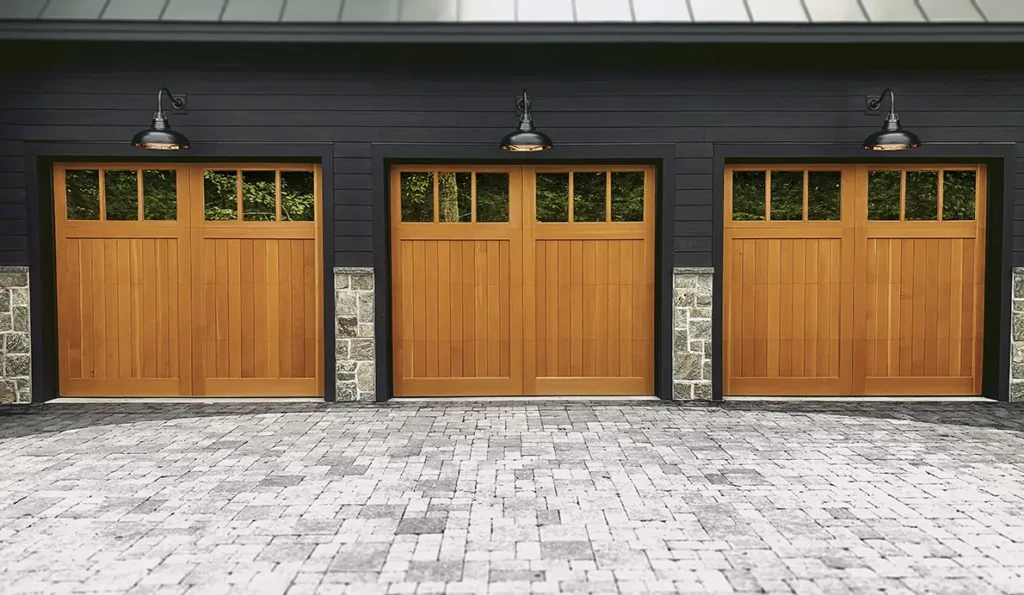
Wood garage doors in Boulder: beautiful, but demanding
Wood garage doors offer the highest curb appeal of any garage door material. It’s a legitimate choice for the right homeowner. But in Boulder, it’s also the most demanding material to maintain, and it’s worth being honest about that before you commit.
At elevation, UV intensity accelerates surface degradation faster than most homeowners expect. A wood door that holds a finish well in a milder climate may need refinishing sooner in Boulder. The combination of intense sun and dramatic temperature swings creates conditions that are genuinely hard on wood surfaces and joints.
Wood also expands and contracts more than any other common garage door material. In a climate where a door can go from a hard freeze overnight to 60-plus degrees by afternoon, that movement adds up. Warping, joint separation, and panel cracking are real risks, particularly on doors that aren’t constructed to handle dimensional stress.
What regular maintenance looks like for a wood door in Boulder:
- Sealing or refinishing every one to three years, depending on finish quality and sun exposure
- Annual inspection for warping, joint separation, and surface cracking
- Prompt attention to any areas where the finish has failed, because exposed wood at Boulder’s UV load deteriorates quickly
Best fit: Homeowners who genuinely value the look of wood and are willing to stay on top of the maintenance it requires. It’s not the right choice for someone who wants a door that holds up on its own.
Steel garage doors in Boulder: durable when done right
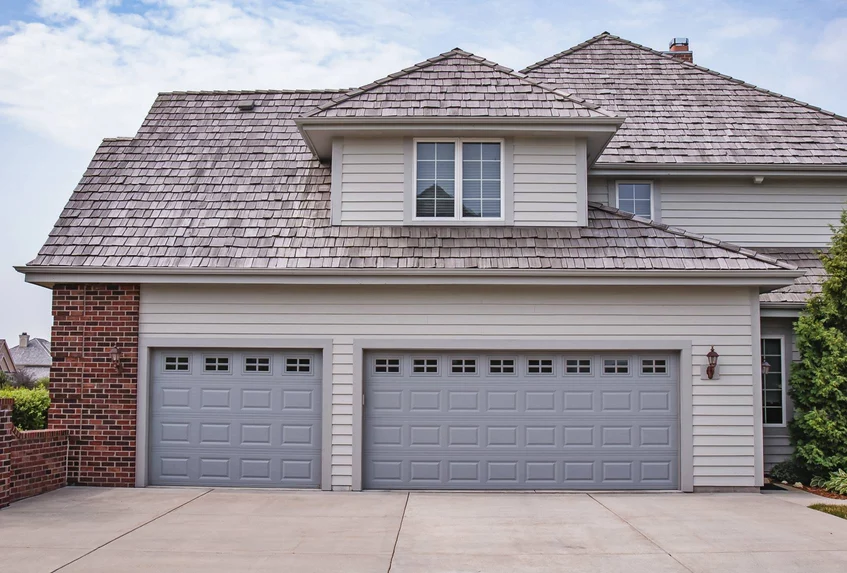
Metal garage doors constructed with steel are the most common residential garage door material, and for good reason. It’s durable, widely available, and cost-effective. In Boulder, it performs well when the right construction is chosen and less well when it isn’t.
The single most important variable is insulation. An uninsulated steel door conducts heat and cold directly. In a climate with Boulder’s temperature swings, that means more dimensional stress on the door itself and less thermal performance for any attached or temperature-sensitive garage. An insulated door manages that stress better, holds its shape through more cycles, and holds up longer.
The other area to watch is edge protection. Steel is vulnerable at scratched or exposed edges, and in a climate with temperature cycling and occasional moisture, rust can develop at those points faster than it would in a more stable environment. A quality coating and routine attention to any surface damage makes a real difference over time.
What steel does well in Boulder:
- Strong structural performance when properly gauged and insulated
- Lower maintenance than wood across most of the door’s surface area
- Better wind resistance in heavier gauges, which matters in a high-wind market
What to watch for:
- Edge rust at scratches or hardware connection points, especially in older doors or lower-quality coatings
- Thermal performance gaps in uninsulated or lightly insulated construction
- Dimensional fatigue in thinner gauge doors that aren’t built for repeated expansion and contraction cycles
Best fit: Homeowners who want a practical balance of durability, cost, and moderate maintenance. Insulated steel in a quality gauge is a solid long-term choice for most Boulder homes.moment. Choosing the right material upfront is the most reliable way to avoid that.
Aluminum garage doors in Boulder: a modern look with real tradeoffs
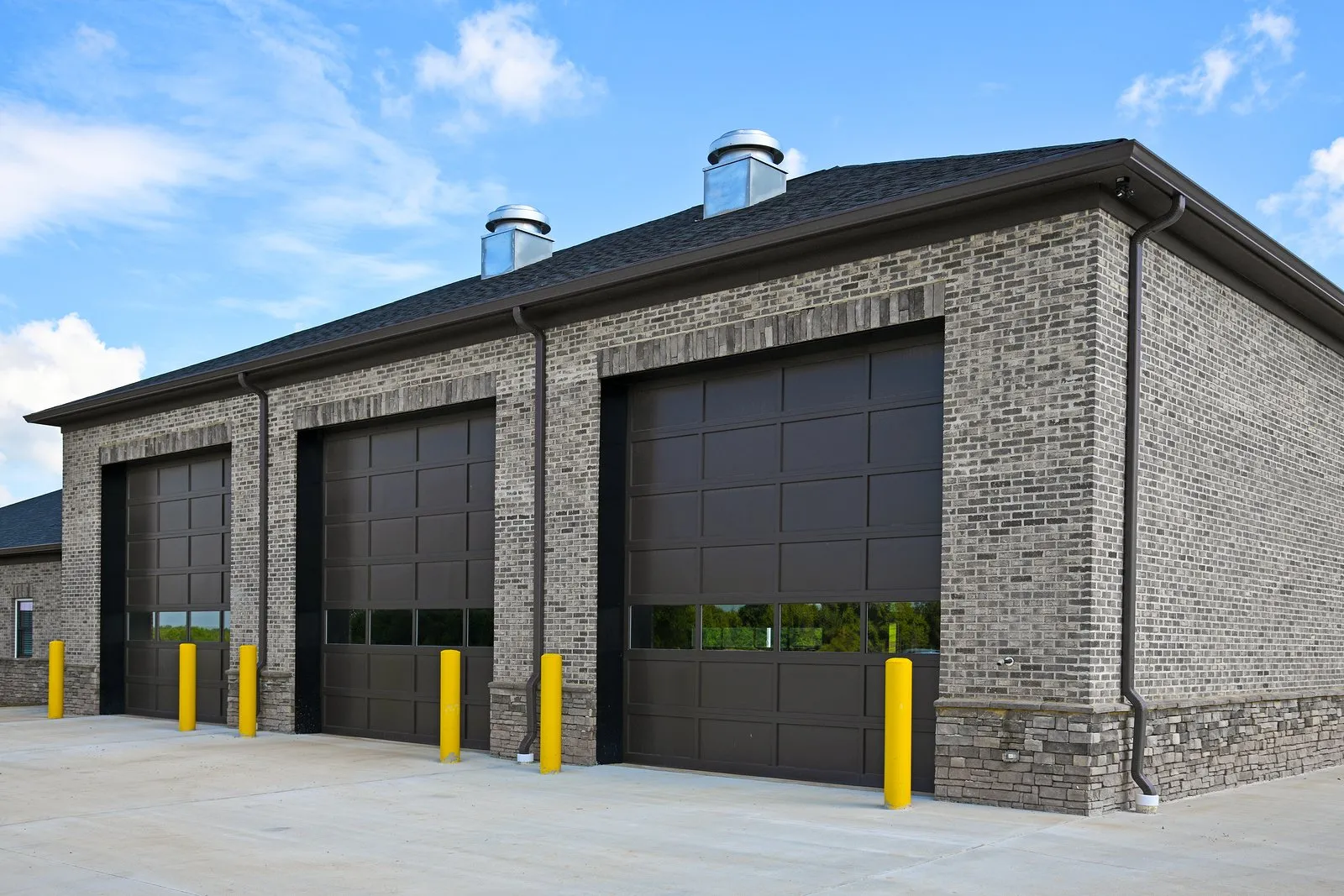
Aluminum is lightweight, rust-resistant, and carries a clean contemporary aesthetic that works well with modern architecture. Glass-panel aluminum doors in particular have become a popular design choice, and in the right situation, they’re a legitimate option.
The honest tradeoff in Boulder is impact resistance. Aluminum dents more easily than steel, and the Front Range is a hail-prone market. Boulder and the surrounding area see meaningful hail activity, and a dented aluminum door is both a cosmetic and structural issue. It’s worth factoring that in before committing to the material.
Aluminum doors also offer less insulation by default than steel options. In a climate with Boulder’s temperature swings, that gap matters, both for energy performance in an attached garage and for the dimensional stability of the door itself over time.
Best fit: Contemporary homes where the architectural style calls for it, sheltered or lower-exposure installations, and homeowners who understand the tradeoffs and are prioritizing design. In more exposed locations or on homes where hail damage is a regular concern, the tradeoffs deserve honest consideration before you decide.
Composite garage doors in Boulder: the long-term value case
Composite is the material that most consistently delivers the best total cost of ownership for Boulder homeowners, and it’s also the one most people are underinformed about.
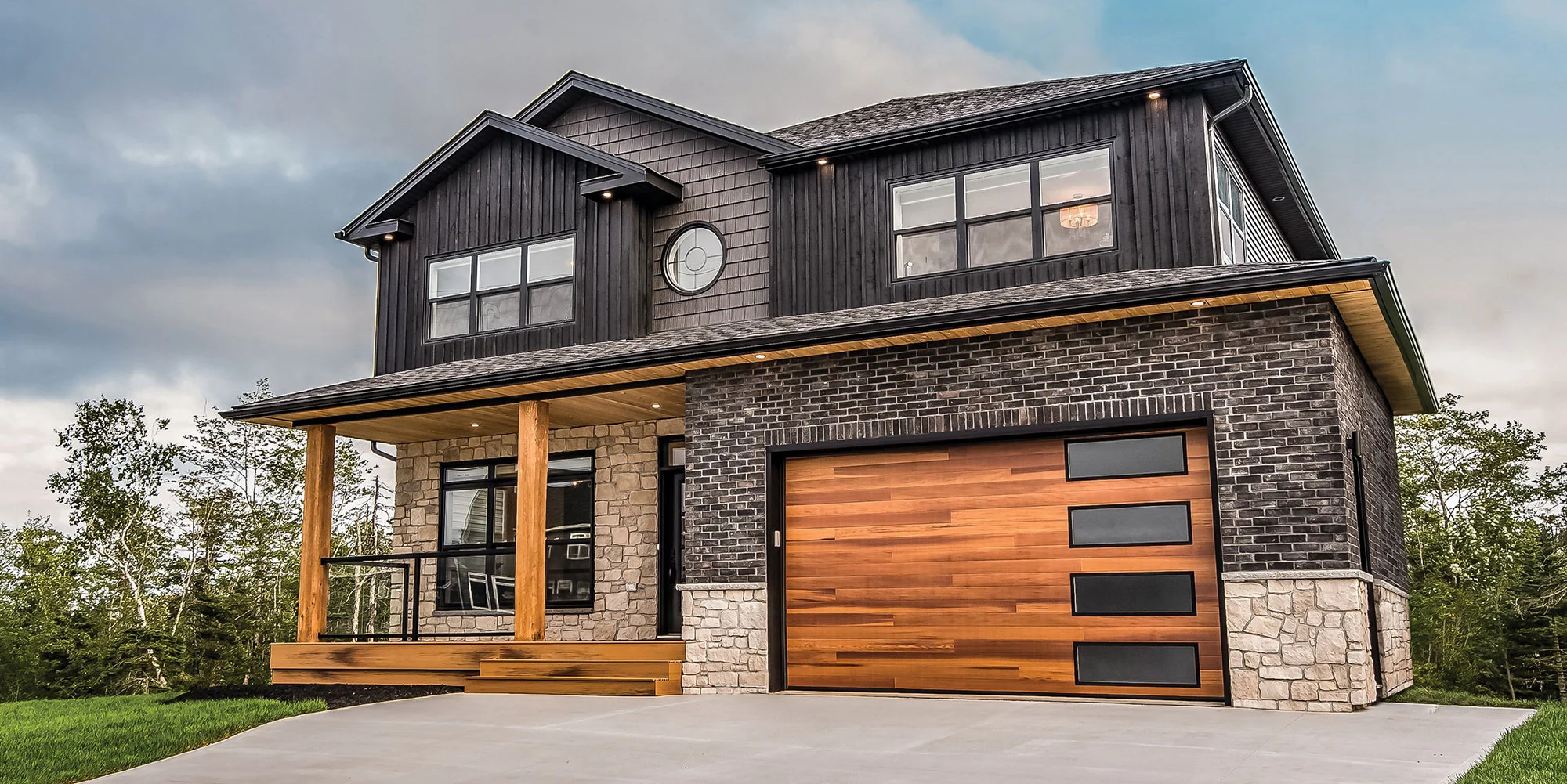
Composite doors are engineered specifically to resist the conditions that degrade wood and stress steel. They handle moisture without swelling, UV exposure without rapid surface degradation, and temperature cycling without the dimensional movement that leads to warping and joint stress. They’re built for climates like Boulder’s in a way that wood simply isn’t.
The appearance of composite has improved significantly. Faux wood composite doors in particular offer the aesthetic of real wood without the maintenance commitment, which is a meaningful tradeoff for a Boulder homeowner who wants the look but not the upkeep.
The upfront cost is higher than wood or steel, and that’s a real consideration. But when total cost of ownership is calculated across a 10 to 15-year horizon, including avoided refinishing costs, reduced repair frequency, and longer replacement intervals, composite often comes out ahead in a climate as demanding as Boulder’s.
What composite does well in Boulder:
- Resists UV degradation better than wood or painted steel finishes
- Handles temperature cycling without significant dimensional movement
- Maintains appearance and structural integrity with minimal routine maintenance
- Delivers wood aesthetics without the ongoing upkeep commitment
Best fit: Homeowners planning to stay in the home long-term, anyone who wants wood aesthetics without the maintenance, and anyone who wants to minimize the long-term repair and maintenance relationship with their garage door. In Boulder’s climate, composite is often the honest long-term value recommendation, not as an upsell, but as the material that holds up best over time.
Why insulation matters more in Boulder than most markets
An insulated garage door deserves its own conversation because it’s a decision that cuts across every material type, and many homeowners treat it as an optional upgrade. In Boulder, it isn’t optional in any meaningful sense.
Here’s why it matters:
- Energy performance. An insulated garage door reduces heat loss during Boulder’s cold snaps and helps maintain more consistent temperatures in attached garages. If your garage shares a wall with a living space, the door’s insulation value directly affects your heating costs and comfort.
- Dimensional stability. Insulation reduces the temperature differential between the inside and outside of the door panel, which means less expansion and contraction with every temperature swing. In a climate where those swings happen daily during shoulder seasons, that reduction in movement adds up to real longevity.
- Structural rigidity. Insulated doors, particularly those with a polyurethane core, are structurally stiffer than non-insulated single-layer doors. That rigidity matters when wind loads are a real consideration, as they are across most of the Front Range.
The right R-value depends on how the garage is used, whether it’s attached or detached, and what your energy priorities are. It’s not a one-size answer. But the baseline principle for Boulder is straightforward: insulation is worth it, and the doors that don’t have it are working harder against the climate than they need to be.ulder homes.moment. Choosing the right material upfront is the most reliable way to avoid that.
What to expect from maintenance across each material
Setting realistic expectations before you commit is part of making a good decision. Here’s an honest breakdown:
- Wood: Highest maintenance of any material. Plan for sealing or refinishing every one to three years, annual inspection for warping and joint separation, and prompt attention to any finish failure. In Boulder’s UV environment, deferred wood maintenance accelerates deterioration faster than it would elsewhere.
- Steel: Moderate maintenance. Inspect for scratches and exposed edges regularly and address any rust before it spreads. Lubricate hardware annually. Insulated steel requires less attention than uninsulated, and a quality coating extends the interval between significant maintenance needs.
- Aluminum: Low to moderate for the finish itself, but dent awareness is ongoing. Inspect seals and hardware as you would with any door. If hail is a recurring concern in your neighborhood, keep an eye on panel condition after major storms.
- Composite: Lowest maintenance of the four. Routine hardware inspection and lubrication is typically the full extent of ongoing upkeep. The material is designed to resist what Boulder’s climate delivers, and in practice, it does.
A simple framework for choosing the right material
Before you call, it helps to think through a few honest questions. The answers shape the recommendation more than anything else:
- How long do you plan to stay in the home? Long-term ownership makes composite and insulated steel worth the upfront investment. Shorter-term ownership may shift the value toward steel or aluminum at a lower price point.
- How much maintenance are you willing to do? If the honest answer is “not much,” wood is probably not the right choice in Boulder. Composite is.
- Is your garage attached or temperature-sensitive? Insulation matters more for attached garages and anywhere interior temperature affects adjacent living spaces or stored items.
- Do you prioritize appearance or durability? Both are legitimate priorities. Wood and composite offer the highest curb appeal. Steel and composite offer the strongest durability. Composite is the one material that delivers both consistently in Boulder’s climate.
- What’s your realistic budget across the life of the door, not just at purchase? Framing the budget conversation around total cost of ownership, including maintenance and repair frequency, changes the answer for a lot of homeowners.
There’s no universally correct answer. The right material depends on your home, your situation, and your priorities. What we can do is help you think through it honestly before you commit.
Ready to talk through your options?
If you’ve worked through this article and you’re ready to have a real conversation about what makes sense for your home, we’re here. Our team has been doing this work in Boulder and across the Front Range since 1998, and the approach hasn’t changed: honest information, real options, no pressure toward any particular outcome.
Whether you’re planning a new installation, thinking about a replacement, or just want a professional assessment before you decide anything, you can reach us through our Boulder garage door service page, our residential maintenance and repair page, or our contact page to schedule a conversation. We’re available 24/7, including emergency garage door repair for situations that can’t wait.
About Primos Garage Doors
We’re a family-owned garage door company based in Lafayette, Colorado, and we’ve been serving Boulder and the surrounding Front Range since 1998. Our reputation was built on referrals and long-term relationships, not advertising. More than 80% of our customers come back, and many of them find us because they saw a Primos service sticker on a door we worked on years ago.
We carry consistent five-star ratings across Google, HomeAdvisor, and Angi, and we were named Best Garage Door Repair in Lafayette by Quality Business Awards in 2024. We’re available 24/7, including emergency repairs for situations that can’t wait for a scheduled appointment.
If you’re in Boulder and want a company that’ll be straight with you about what your door needs, we’re the call to make. Visit our Boulder garage door service page to learn more, or contact us directly to get started.
Frequently Asked Questions (FAQ)
Does garage door material really matter that much in Boulder specifically, or is this a general recommendation that applies anywhere?
It matters more in Boulder than in most markets, and that’s not a marketing line. The combination of high-altitude UV exposure, dramatic temperature swings, freeze-thaw cycling, and Chinook wind events creates a specific stress profile that doesn’t exist at lower elevations or in milder climates. A wood door that holds a finish well in a stable climate may need refinishing significantly sooner here. An uninsulated steel door that performs acceptably elsewhere is working harder against the environment than it needs to in Boulder. Material selection in this market is a performance decision, not just an aesthetic one.
Is composite really worth the higher upfront cost, or is that just an upsell?
It depends on your situation, but for Boulder homeowners planning to stay in the home long-term, composite often makes financial sense when you factor in the full picture. Wood requires regular refinishing and inspection. Cheaper steel can develop edge rust and seal issues that add up over time. Composite is designed to handle moisture, UV load, and temperature cycling without the maintenance overhead, and in a demanding climate like Boulder’s, that adds up to real savings across a 10 to 15-year horizon. We’re not going to tell you it’s the right choice for every homeowner, but we will tell you it’s not just a premium upsell. For the right situation, it’s the most practical long-term decision.
What’s the most common material mistake Boulder homeowners make when buying a new garage door?
Choosing based on appearance or initial price without factoring in insulation. The upgrade from non-insulated to insulated construction matters more in Boulder than almost anywhere else, because the temperature swings here are severe enough that an uninsulated door is fighting the climate constantly. It shows up as accelerated wear on panels and seals, more frequent maintenance, and shorter overall lifespan. It’s one of the most consistent patterns we see across 27 years of Front Range work, and it’s one of the most avoidable.
How do I know if my current garage door is still worth maintaining versus replacing?
A few honest factors guide that conversation. A door that’s under 15 years old, well-maintained, and showing isolated wear is usually worth repairing and continuing to maintain. A door that’s older, non-insulated, has been through several Front Range seasons without meaningful upkeep, or is showing widespread panel wear or seal degradation may be at the point where a replacement is the more practical long-term investment. We’ll give you a clear assessment of which situation you’re in when we look at the door, without steering you toward either outcome. The goal is to give you an honest picture of what your current door is actually worth maintaining.
Do you work with all major garage door brands and materials, or only specific ones?
We work with all the major residential door manufacturers and materials across our Boulder service area, including brands like C.H.I., Amarr, and Clopay, as well as LiftMaster and other opener systems. Our recommendations are based on what we’ve seen hold up on the Front Range over nearly three decades, not on any particular brand relationship. If a specific product or brand is the right fit for your home and situation, that’s what we’ll recommend.
How often should a Boulder homeowner have their garage door professionally inspected?
Once a year is a reasonable baseline, and timing it before winter makes sense given the stress that Boulder’s freeze-thaw cycles put on seals and hardware. If your door took a significant hail event, a post-storm inspection is worth scheduling even if the door appears to be operating normally. Some of the wear that matters most isn’t visible from the outside, and catching it early is almost always less expensive than dealing with it after it progresses.
Primos Garage Doors serves Boulder and communities throughout the Colorado Front Range. We’re available 24/7 for new installations, repairs, and professional inspections. Honest work. Lasting repairs. Neighbors you can trust.