

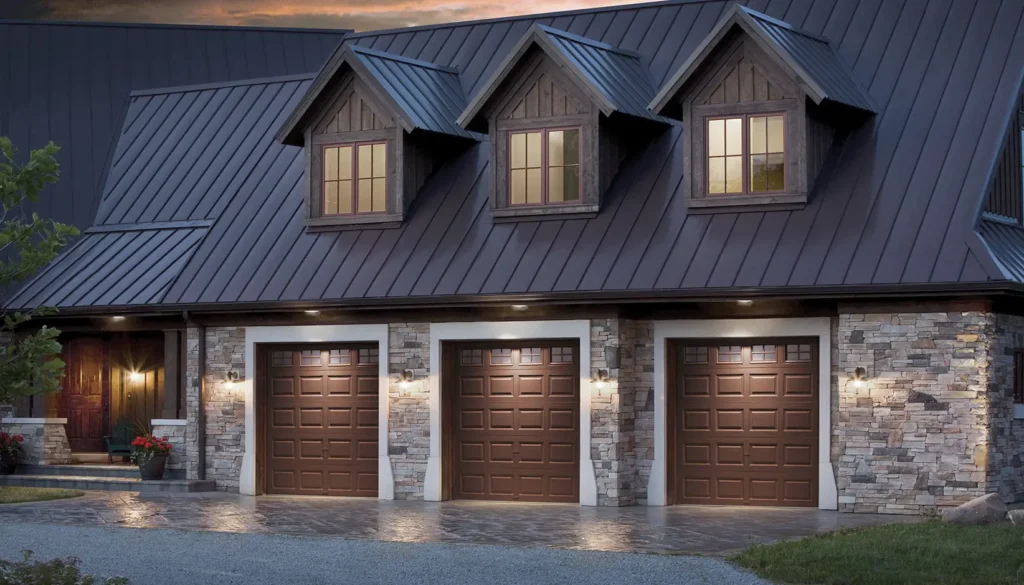
If you’ve lived in Loveland for more than a season or two, you already know what spring and summer look like around here. The storms come in fast, the hail can go from pea-sized to golf ball-sized in minutes, and by the time it’s over, you’re walking the perimeter of your property trying to figure out what took a hit.
Your garage door is usually one of the first things to check. It’s the largest moving component on most homes, it faces the weather directly, and it takes the full force of whatever the Front Range throws at it. The good news is that most storm-related garage door problems are either preventable or manageable when you know what to look for before the season starts.
This guide walks you through exactly that.
Why Loveland garage doors take a harder hit than most
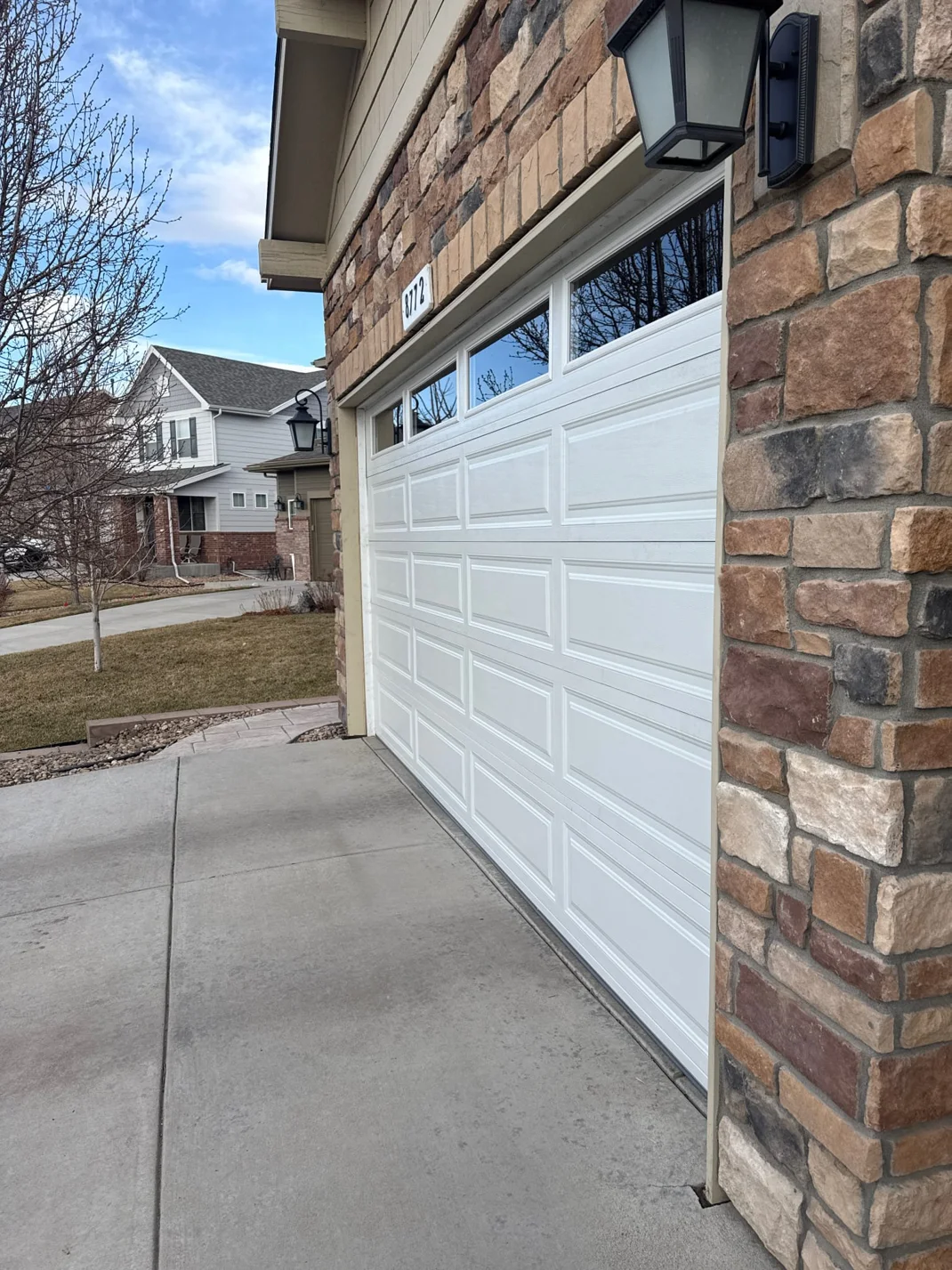
Loveland sits along the Front Range foothills in one of Colorado’s most active hail corridors. Spring storms here aren’t rare weather events, they’re a seasonal pattern. The combination of hail frequency, high winds common to the foothills geography, and wide temperature swings creates a specific stress profile for garage doors that doesn’t exist in most other parts of the country.
What makes this worth paying attention to is the compounding effect. A single hail event might leave your door looking a little rough but still operational. Two or three seasons of that, on a door that was never inspected or maintained in between, can leave you with compromised panels, loosened hardware, and worn seals that are one bad storm away from becoming a real problem.
The team at Primos Garage Doors has worked on doors across Loveland and the surrounding Front Range for over 27 years. The pattern we see most often isn’t dramatic failure after a single storm, it’s gradual deterioration that finally gives way at the worst possible moment, and getting ahead of it is always the better outcome.
What hail actually does to a garage door
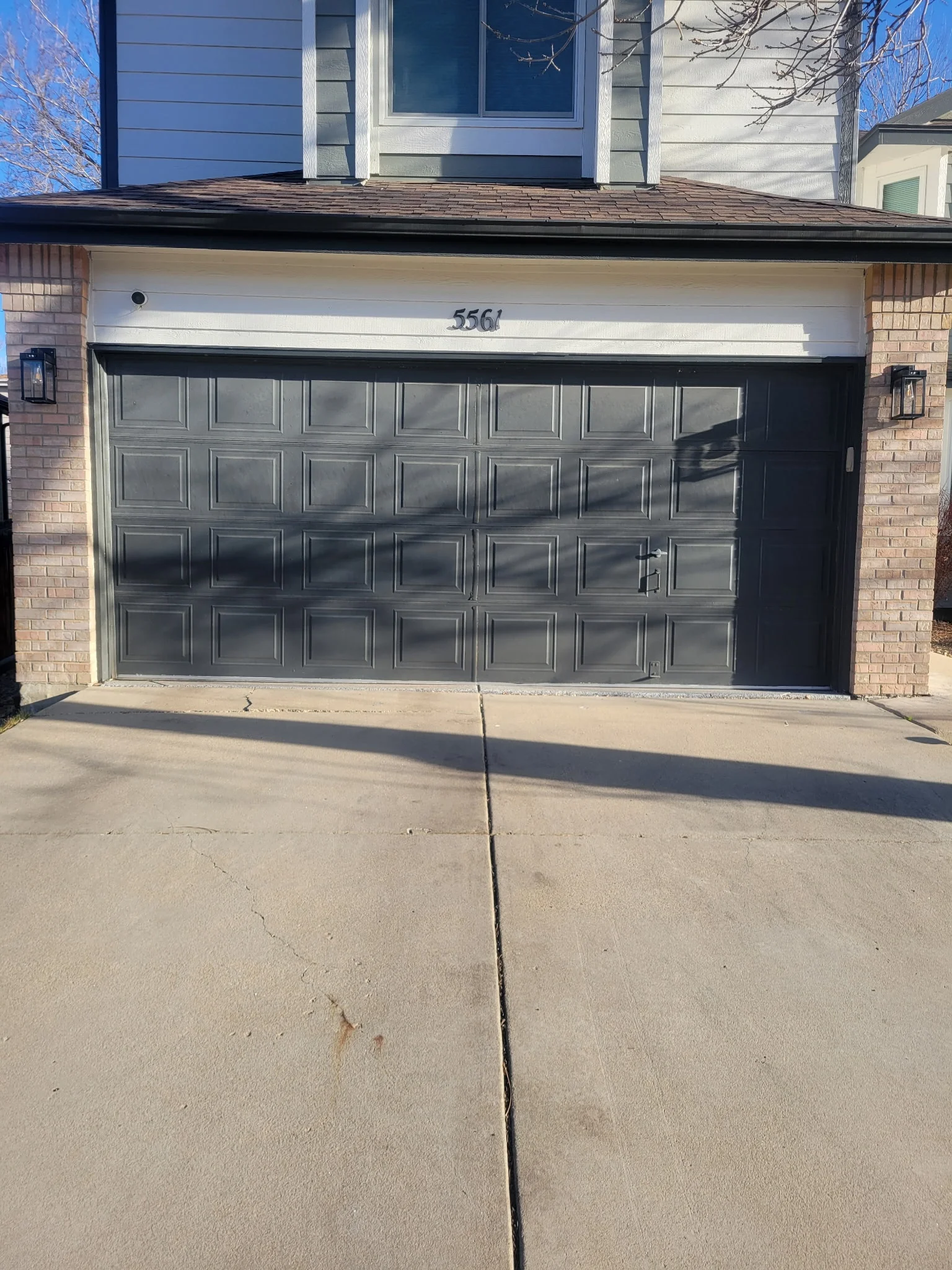
Most homeowners assume hail damage means dents, and that’s where the assessment stops. The visible dents are real, but they’re often not the whole story.
Here’s what hail and storm events actually do to a garage door system:
- Surface dents form where hail strikes the panels directly. These range from minor cosmetic marks to deeper impacts that affect panel rigidity.
- Panel micro-fractures can develop in steel doors after significant impacts, weakening the structure without being immediately visible from the outside.
- Track misalignment is a common secondary effect. The vibration from a major hail event works on the hardware over time, and tracks that were slightly off can shift further out of alignment.
- Seal damage along the bottom and sides allows water intrusion that compounds over time, leading to rust, warping, and interior moisture problems.
- Opener and hardware stress accumulates with each storm season, accelerating wear on components that were already aging.
Cosmetic damage versus structural compromise
This is the distinction that matters most after a storm, and it’s one that most homeowners don’t have a clear framework for making.
Cosmetic damage affects how the door looks. A dent that doesn’t change how the door moves, seals, or holds under wind pressure is a cosmetic issue. It’s worth noting and worth monitoring, but it doesn’t change how the door performs.
Structural compromise is different. It affects panel rigidity, track alignment, seal integrity, or the door’s ability to hold its shape under load. Multiple smaller dents concentrated in one area of a panel can weaken it even if each mark looks minor on its own. A door that’s been through several hail seasons without inspection may have accumulated enough structural wear that the next storm tips it past the point of reliable function.
The test isn’t how bad the door looks, it’s how it moves, how it seals, and how it holds.
How to inspect your garage door before storm season hits
This inspection takes about 20 to 30 minutes and doesn’t require any special tools. You can work through it section by section:
Start with a visual pass on the panels
Walk the full width of the door and look for dents, cracks, or areas where the panel surface appears soft or bowed. Pay particular attention to the center sections, where hail impact tends to concentrate. If any section feels different under light hand pressure, for example softer, or with more flex than the panels around it, that’s worth noting. Look for any panels that sit misaligned relative to the sections above and below them.
Check your weather seals
The bottom seal should be flexible, intact, and making full contact with the ground across the entire width of the door. Side and top seals should show no cracking, brittleness, or sections pulling away from the frame. Here’s a simple test: hold a piece of paper against the seal, close the door, and try to slide the paper out. If it moves easily, the seal isn’t doing its job.
Look at the tracks and hardware
Tracks should be straight with no visible bends, crimps, or sections pulling away from the wall. Check all visible bolts and brackets by hand, storm vibration works hardware loose over time, and a loose bracket is easy to tighten now and a potential track failure later. Look for rust or debris buildup inside the track, both of which increase wear on rollers.
Assess springs and cables
Springs should show no visible rust, gaps between coils, or signs of stretching or distortion. Cables should be taut and evenly wound with no fraying. If anything looks off in this area, don’t touch it. Springs and cables are under significant tension and represent a real safety risk when handled without the right training and tools. Flag it and call a professional.
Run the balance test
Disconnect the opener by pulling the manual release cord, then lift the door by hand to about waist height and let go. A properly balanced door stays in place or moves only slightly. A door that drops quickly or drifts upward on its own is out of balance, which puts added strain on the opener, the springs, and the entire system.
Test the opener
Run the door through a full open and close cycle and listen for grinding, popping, or hesitation. Confirm that the auto-reverse safety feature engages when something is placed in the door’s path. If the opener has a backup battery, test it now rather than discovering it’s dead during a power outage.
Warning signs your door won’t hold up in a storm
Some of these will surface during your inspection, others are things you may have noticed over time and filed away as “it’s fine for now.” Storm season is a good reason to take them seriously.
- Slow, uneven, or jerky movement during operation
- Grinding, popping, or unusual noise when opening or closing
- Visible gaps along the sides or bottom where light or air comes through
- Panels that sag, bow, or sit out of alignment
- A door that reverses unexpectedly or struggles to complete a full cycle
- Operational issues that have been patched temporarily rather than properly repaired
Storms don’t create weaknesses in a garage door system, they find the ones that are already there. A door showing any of these signs before storm season is a door that’s more likely to fail during one.
Weatherproofing your Loveland garage door for storm season
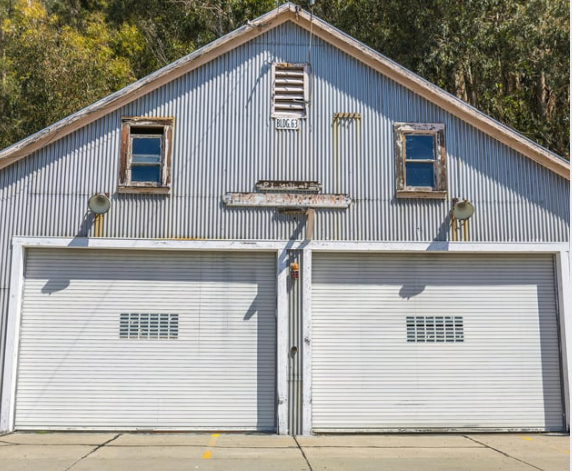
Weatherproofing gets discussed mostly in the context of winter energy efficiency, but for Loveland homeowners, the more pressing case for it is storm performance. A properly sealed and reinforced door handles hail, wind, and rain better than one that hasn’t been maintained, and the upgrades that matter most aren’t expensive.
Seals and weatherstripping
Replacing a worn bottom seal is one of the highest-value low-cost upgrades you can make before storm season. A new bottom seal typically costs between $30 and $75 in materials, takes an hour to install, and prevents water intrusion that can cause rust, warping, and interior damage over time. Side and top weatherstripping should be inspected at the same time and replaced if it’s brittle, cracked, or pulling away from the frame.
Reinforcement struts
Horizontal reinforcement struts added across door panels increase wind resistance and reduce the panel flexing that high-wind events cause. This is especially worth considering on older single-layer steel doors. A strut upgrade is a practical structural improvement, not a luxury, for a door that’s going to face another Front Range storm season.
Hardware tightening
Tightening all visible bolts and brackets takes less than an hour and costs nothing. It’s also one of the most commonly skipped maintenance steps. Storm vibration works hardware loose gradually, and the cumulative effect over multiple seasons adds up to real wear on tracks, rollers, and the door’s overall alignment.
When a full replacement makes more sense
Some doors are worth investing in. Others have reached the point where individual upgrades provide diminishing returns. If your door is 15 to 20 years old, non-insulated, or has been through enough hail seasons that the panel damage is widespread, replacement may be the more cost-effective long-term decision. An insulated door with a polyurethane or polystyrene core also offers better structural rigidity than a single-layer steel door, which matters when wind loads are a real consideration.
A professional assessment can tell you honestly which situation you’re in. The goal isn’t to sell a new door, it’s to give you a clear picture of what your current door is actually worth maintaining.

When to call a professional and what to expect
Some of what this inspection turns up is straightforward homeowner maintenance, but some of it isn’t.
Book an appointment with a Loveland garage door professional if you’re dealing with any of the following:
- Spring or cable damage of any kind
- Structural panel damage that affects how the door moves or seals
- Track misalignment you can see but can’t correct
- A door that’s failing the balance test significantly
- Persistent operational issues that haven’t responded to basic maintenance
- Post-storm damage you can’t clearly identify as cosmetic
When you contact Primos Garage Doors, here’s what a storm-prep inspection actually looks like. We’ll run a full system diagnostic from panels and tracks through springs, cables, and opener. We test the auto-reverse and sensor functions. We evaluate structural integrity beyond what a visual pass alone can confirm, and we walk you through exactly what we found, what it means, and what your realistic options are. This can be a targeted repair, a specific upgrade, or a replacement conversation.
There’s no pressure toward any particular outcome, our job is to give you clarity so you can make a confident decision about your own home. That’s how we’ve worked for 27 years, and it’s not something that changes based on what a new door costs.
About Primos Garage Doors
We’re a family-owned garage door company based in Lafayette, Colorado, and we’ve been serving Loveland and the surrounding Front Range since 1998. Our reputation was built on referrals and long-term relationships, not advertising. More than 80% of our customers come back, and a lot of them find us because they saw a Primos service sticker on a door we worked on years ago.
We carry consistent five-star ratings across Google, HomeAdvisor, and Angi, and we were named Best Garage Door Repair in Lafayette by Quality Business Awards in 2024. We’re available 24/7, including emergency garage door repair for situations that can’t wait for a scheduled appointment.
If you’re in Loveland and want a company that will be straight with you about what your door needs, we’re the call to make. Visit our Loveland garage door service page to learn more about what we offer in your area, or contact us directly to schedule an inspection.

Frequently Asked Questions (FAQ)
Can hail actually damage a garage door, or is it mostly cosmetic?
It depends on the severity of the storm and the condition of the door. Minor hail often leaves cosmetic dents that don’t affect performance. Larger hail, or repeated storm seasons on a door that hasn’t been maintained, can cause panel micro-fractures, track misalignment from vibration, and seal damage that leads to water intrusion. The visible dents are just the starting point, a proper inspection looks at how the door is actually functioning, not just how it looks.
How do I know if my garage door needs repair or full replacement after a storm?
The honest answer is that it depends on the door’s age, condition, and the extent of the damage. A door that’s under 15 years old, well-maintained, and showing isolated damage is usually worth repairing. A door that’s older, non-insulated, and has been through multiple hail seasons without maintenance may be at the point where replacement is the more practical long-term decision. A professional inspection will give you a clear picture of which situation you’re in, without pressure toward either outcome.
What’s the most important thing I can do before storm season to protect my garage door?
Walk through a basic inspection covering panels, seals, tracks, hardware, springs, and opener function, and address anything showing wear before the storms arrive. Replacing a worn bottom seal and tightening loose hardware are two low-cost steps that make a real difference. If you find anything involving springs, cables, or structural panel damage, call a professional rather than trying to address it yourself.
Are reinforcement struts worth it for a Loveland home?
For older single-layer steel doors, yes. Reinforcement struts add horizontal rigidity across the panels, which reduces flexing under wind load and helps the door hold up better during high-wind events. They’re not a luxury upgrade in a market where strong spring storms are a regular seasonal reality. A garage door professional can tell you whether your current door is a good candidate for struts or whether the investment would be better directed elsewhere.
How often should a garage door be professionally inspected in a hail-prone area like Loveland?
Once a year is a reasonable baseline, and doing it before storm season, spring, in most cases, makes the most sense. If your area took a significant hail event, a post-storm inspection is worth scheduling even if the door appears to be operating normally. Some of the damage that matters most isn’t visible from the outside, and catching it early is almost always less expensive than dealing with it after it progresses.
Primos Garage Doors serves Loveland and communities throughout the Colorado Front Range. We’re available 24/7 for emergency repairs and pre-season inspections. Honest work. Lasting repairs. Neighbors you can trust.